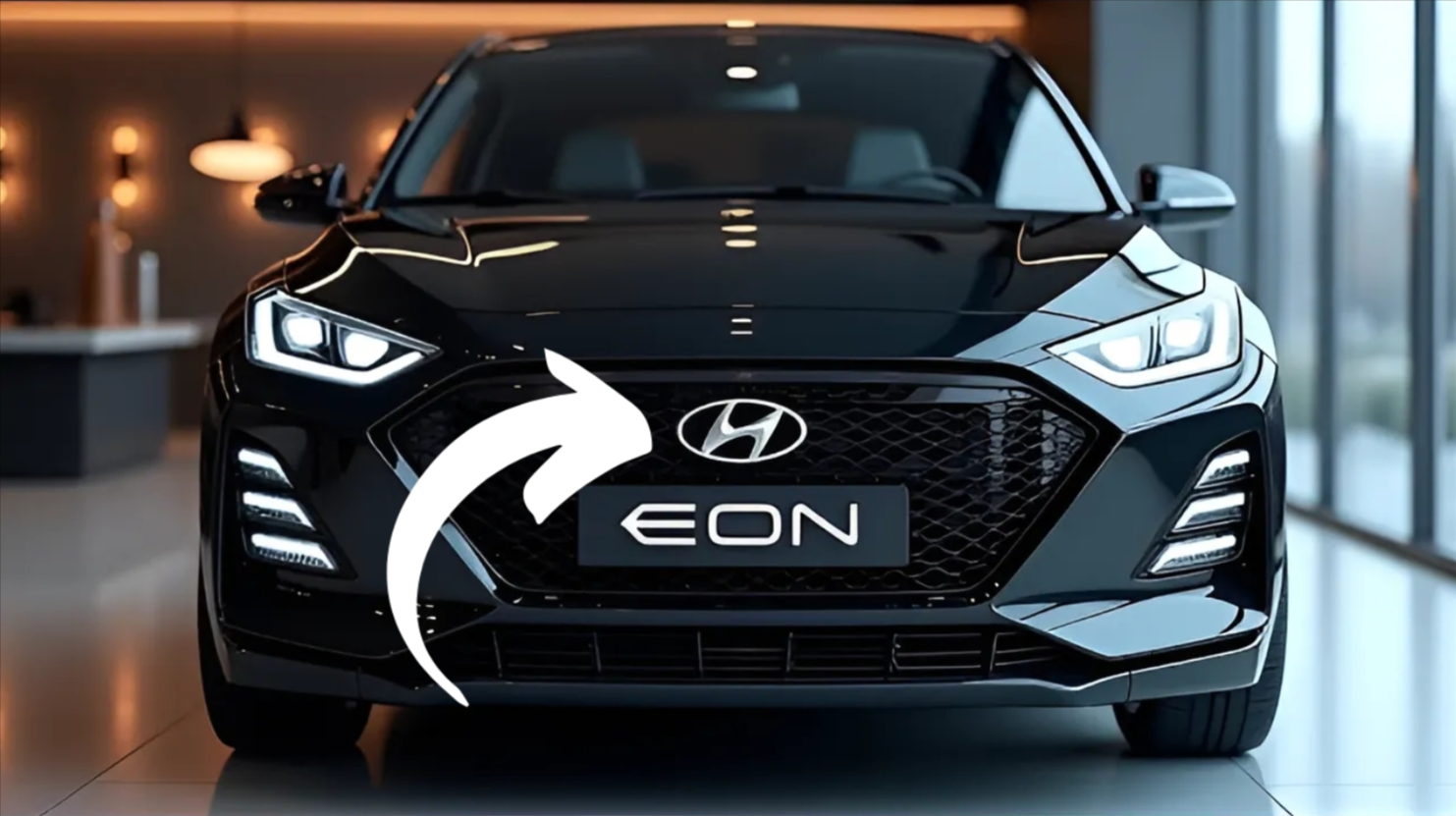

Hyundai is gearing up to bring back one of its most popular entry-level hatchbacks — and it’s not just nostalgia driving this comeback. The 2025 Hyundai Eon is shaping up to be a smart, city-savvy, tech-friendly car for India’s new generation of urban drivers. Expected to debut later this year, the new Eon takes everything people loved about the original — compact practicality, affordability, and ease of use — and wraps it in a modern, premium-looking shell that punches above its price tag.
A Fresh Design
Forget everything you remember about the old Eon’s cutesy, compact lines — the 2025 Hyundai Eon is leaner, bolder, and more mature. The design follows Hyundai’s “Sensuous Sportiness” language, similar to what we’ve seen in the new Exter and Grand i10 Nios.
Up front, the sleek LED headlamps with integrated DRLs and a wider grille lend it a confident, almost mini-i20 look. The sculpted side panels and fluidic lines not only make it attractive but also improve aerodynamics — helping with fuel efficiency.
The car’s compact proportions mean it’s still perfect for India’s tight parking spots and crowded streets, but the new Eon manages to feel grown-up without losing its city-friendly charm.
| Design Highlights | Details |
|---|---|
| Headlamps | LED with DRLs |
| Wheels | 14-inch diamond-cut alloys (top trims) |
| Grille | Wider hexagonal with chrome finish |
| Body Style | 5-door hatchback |
| Dimensions | Compact (under 3.6m length, est.) |
An Interior That Feels Premium for Its Class
Step inside, and the 2025 Hyundai Eon feels miles ahead of the model it replaces. Hyundai has borrowed cues from the Exter and Aura to give this small car a surprisingly premium cabin experience.

The dual-tone dashboard features soft-touch inserts and a floating 8-inch touchscreen infotainment system with Android Auto and Apple CarPlay. A fully digital instrument cluster, multi-function steering wheel, and rear parking camera are expected on higher variants.
Even at the entry level, you’ll find clever touches — cup holders, ample door pockets, and a flat rear floor for added comfort. Hyundai has also worked on noise insulation, making city drives quieter and more relaxing.
| Cabin & Features | Highlights |
|---|---|
| Infotainment | 8-inch touchscreen, Android Auto, Apple CarPlay |
| Instrument Cluster | Digital with trip info & fuel economy display |
| Connectivity | USB & Bluetooth |
| Comfort | Adjustable headrests, improved legroom |
| NVH Levels | Enhanced sound insulation |
Engine and Performance Meets Hybrid Efficiency
While Hyundai hasn’t officially confirmed engine details, strong indications point to a 1.0-litre, 3-cylinder petrol engine, possibly shared with the Grand i10 and Santro lineups. This engine will likely produce around 67 bhp and 95 Nm of torque, paired with either a 5-speed manual gearbox or a 5-speed AMT (automated manual transmission).
There’s also speculation about a mild-hybrid variant using Hyundai’s Smart Hybrid technology — offering start-stop functionality and regenerative energy recovery for even better mileage.

Mileage, predictably, will be one of its biggest selling points. Expect around 22–25 km/l, depending on the variant. For city commutes and daily office runs, that’s about as frugal as it gets without going electric.
| Engine Options | Specification |
|---|---|
| Engine | 1.0L, 3-cylinder petrol |
| Power | ~67 bhp |
| Torque | ~95 Nm |
| Transmission | 5-speed Manual / 5-speed AMT |
| Mileage | 22–25 km/l (expected) |
Safety and Driving Confidence
Safety is no longer an afterthought, even in the budget car space, and Hyundai seems ready to push the bar higher with the new Eon. The hatchback is expected to come with dual front airbags, ABS with EBD, rear parking sensors, and seatbelt reminders as standard across all trims.
Higher variants could feature ESC (Electronic Stability Control), Hill Start Assist, and a reverse camera. The stiffer body shell and improved crash protection design should help the car comply with the latest Bharat NCAP standards.
| Safety Features | Availability |
|---|---|
| Airbags | Dual (Standard), 4 on top trims |
| ABS with EBD | Standard |
| ESC & Hill Assist | Top variants |
| Rear Parking Sensors | Standard |
| Reverse Camera | Available |
Practical and Affordable
The 2025 Hyundai Eon will take on the Maruti Alto K10, Renault Kwid, and Tata Tiago in India’s hotly contested entry-hatch segment. Where it stands out, though, is its blend of modern design, features, and refined drive experience at a price that still screams value.

Expected prices range from ₹4.5 lakh to ₹6.5 lakh (ex-showroom), depending on trim and gearbox. Hyundai is also expected to offer easy finance plans and a low maintenance package, sweetening the deal for first-time buyers and small families.
| Variant | Expected Price (Ex-Showroom) |
|---|---|
| Eon Base (MT) | ₹4.5 lakh |
| Eon Sportz (MT) | ₹5.4 lakh |
| Eon Asta (AMT) | ₹6.5 lakh |
If the specs and early reports hold true, the Hyundai Eon 2025 could be the brand’s strongest re-entry into India’s entry-level car market. It’s stylish enough for young buyers, practical enough for families, and efficient enough for the daily grind.
Hyundai seems to have cracked the formula — make a small car that feels big where it matters. With its upgraded features, premium interiors, and city-friendly performance, the new Eon may just redefine what “budget hatchback” means in 2025.
FAQs
What is the expected price of the Hyundai Eon 2025?
The new Eon is expected to be priced between ₹4.5 lakh and ₹6.5 lakh (ex-showroom).

Which engine will power the new Hyundai Eon?
It is likely to use a 1.0-litre petrol engine, available with both manual and AMT gearboxes.
What is the expected mileage of the Hyundai Eon?
The car is expected to deliver between 22 km/l and 25 km/l.
Does the new Hyundai Eon have a touchscreen and digital cluster?
Yes, top trims will feature an 8-inch touchscreen infotainment system and a digital instrument display.
Who are the main competitors of the Hyundai Eon 2025?
Its main rivals include Maruti Alto K10, Renault Kwid, and Tata Tiago.
